
The Future of Equity Research: From Manual Publishing to Intelligent Automation
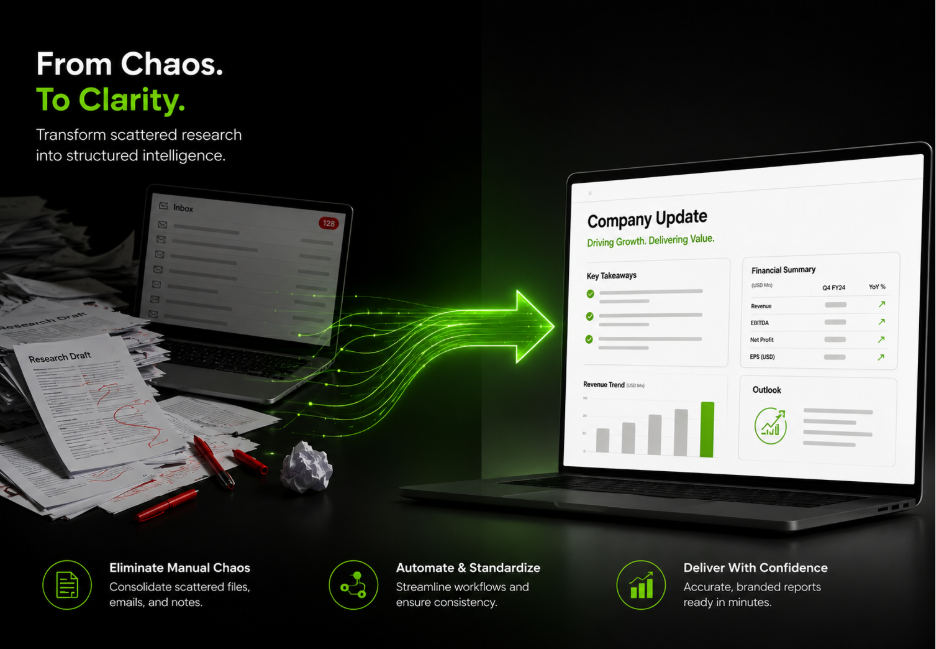
Equity research automation is no longer just about saving time on publishing. It is becoming the foundation for how modern research firms control quality, protect intellectual property, and deliver research faster across channels.
That is why platforms like ANALEC Resonate matter. The conversation has moved beyond formatting reports more efficiently. Research leaders now need a system that connects authoring, approvals, compliance, controlled distribution, and readership visibility in one workflow.
Manual publishing models struggle under that pressure. Analysts still spend too much time on document production. Publishers chase approvals over email. Compliance checks happen too late. Research is distributed through multiple channels without consistent entitlement controls. The result is slower turnaround, weaker governance, and greater risk around content leakage.
The firms that improve fastest are not just digitizing reports. They are redesigning the publishing operating model.
What Is Equity Research Automation?
It is the move from disconnected, manual publishing tasks to a managed workflow that supports research creation, review, compliance, distribution, and post-publication tracking.
That includes:
- structured authoring and template-driven report creation
- workflow-based review and approval routing
- integrated compliance checks and disclosures
- automated publishing to email, portal, PDF, HTML, and aggregators
- readership analytics and engagement tracking
- controlled access to protect premium research content
This is where ANALEC Resonate is relevant early in the conversation, not just at the end. It is designed to support the full research publishing lifecycle rather than treating authoring, approvals, and distribution as separate problems.
Why Are Manual Publishing Processes Becoming a Strategic Weakness?
Manual workflows do more than slow teams down. They create operating risk.
When research passes through Word edits, email approvals, manual disclaimer checks, and separate distribution tools, firms usually run into the same problems:
- delays in getting research to market
- inconsistent formatting and branding
- limited visibility into workflow status
- fragile audit trails
- duplicated effort across publishing channels
- weak control over who receives what content
In equity research, speed matters. But controlled speed matters more. A note published quickly without proper oversight, entitlement rules, or tracking can create reputational and compliance problems that outweigh any productivity gain.
How Does Equity Research Automation Improve Analyst Productivity and Governance?
The productivity case is clear, but the governance case is just as important.
Modern research workflow automation helps firms:
- Reduce production drag so analysts spend less time rebuilding content and more time on insight
- Improve workflow discipline through visible approval stages and accountability
- Support stronger collaboration between analysts, publishers, compliance, and distribution teams
- Scale recurring publications such as morning notes, compendiums, and thematic output
- Maintain consistent delivery quality across formats and channels
The benefit is not simply faster publishing. It is a more reliable publishing function that can support volume, complexity, and tighter review standards without becoming a bottleneck.
Why Is Access Control and IP Protection Becoming More Important in Research Publishing?
For many research firms, this is now a buying trigger.
Premium research is valuable intellectual property. Once distribution expands across email, portals, client links, and third-party aggregators, firms need tighter control over who can access content, how it is shared, and what happens after delivery.
That is why controlled distribution capabilities matter, including:
- entitlement-based access
- digital access rights management
- hidden watermarking
- download restrictions
- audit trails on distribution activity
- controlled access by user, device, or IP logic
Without these controls, firms do not just risk leakage. They lose visibility over content usage, weaken the premium value of research, and create unnecessary exposure around distribution governance.
Why Is ANALEC Resonate Relevant for Modern Equity Research Teams?
ANALEC Resonate is relevant because it connects the operational pieces research firms often manage separately.
It supports:
- end-to-end research workflow management
- research authoring and template-led content creation
- workflow automation and review management
- compliance workflows and approval discipline
- automated publishing across channels
- multi-channel research distribution
- client engagement tracking and readership analytics
- digital access rights management and controlled delivery
- better coordination between analysts, publishers, compliance teams, sales, and clients
That value lands differently across stakeholders:
- Research houses gain a more scalable publishing model
- Analysts reduce manual production work
- Equity sales teams get stronger distribution visibility and targeting support
- Buy-side clients receive research faster and more consistently
- Corporate issuers benefit from better-governed outward communication
ANALEC case materials suggest that firms can achieve meaningful processing-time reductions after modernizing research workflows, although results depend on workflow complexity, legacy processes, and adoption.
What Should Research Firms Do Next?
A practical adoption path usually looks like this:
- map the current publishing bottlenecks across authoring, review, compliance, and distribution
- prioritize high-volume report types first
- build governance into workflow design, not after publication
- treat entitlement control and IP protection as core workflow requirements
- connect publishing to readership analytics so content performance becomes measurable
What Will Define the Next Generation of Research Publishing?
The future of research publishing will be shaped by firms that can combine speed, control, and client relevance in one operating model.
That is why equity research automation is becoming central to research strategy rather than a back-office improvement project. ANALEC Resonate gives research organizations a practical way to modernize how research is authored, governed, protected, distributed, and measured.
For firms still relying on fragmented publishing processes, the commercial question is no longer whether to modernize. It is how much value is being lost by waiting.
FAQs
1. What is equity research automation?
Equity research automation is the use of software to manage research authoring, approvals, compliance checks, publishing, and distribution with less manual effort. It helps firms reduce production delays, improve consistency, and create better control over how research is delivered to clients.
2. Why are manual research publishing workflows no longer enough?
Manual workflows often rely on email approvals, repeated document edits, disconnected compliance checks, and separate distribution tools. That creates delays, increases operational risk, and makes it harder for firms to scale publishing without adding more people and more process friction.
3. How does intelligent automation improve equity research operations?
Intelligent automation improves research operations by reducing repetitive publishing tasks, creating clearer approval workflows, supporting stronger audit trails, and making distribution faster and more controlled. It also gives analysts more time to focus on insight generation rather than production work.
4. Why do access control and IP protection matter in research publishing?
Research is valuable intellectual property. Without strong access controls, firms risk unauthorized forwarding, content leakage, and weaker governance over premium research distribution. Features such as entitlement management, watermarking, download controls, and audit trails help protect content while preserving client service quality.
5. How does ANALEC Resonate support modern research teams?
ANALEC Resonate helps research teams manage the full publishing lifecycle, from authoring and workflow approvals to compliance, automated publishing, controlled distribution, and readership analytics. This gives analysts, publishing teams, compliance teams, and sales teams a more connected operating model for delivering research efficiently and securely.