
Why Fragmented Research Production Processes Slow Down Institutional Client Engagement
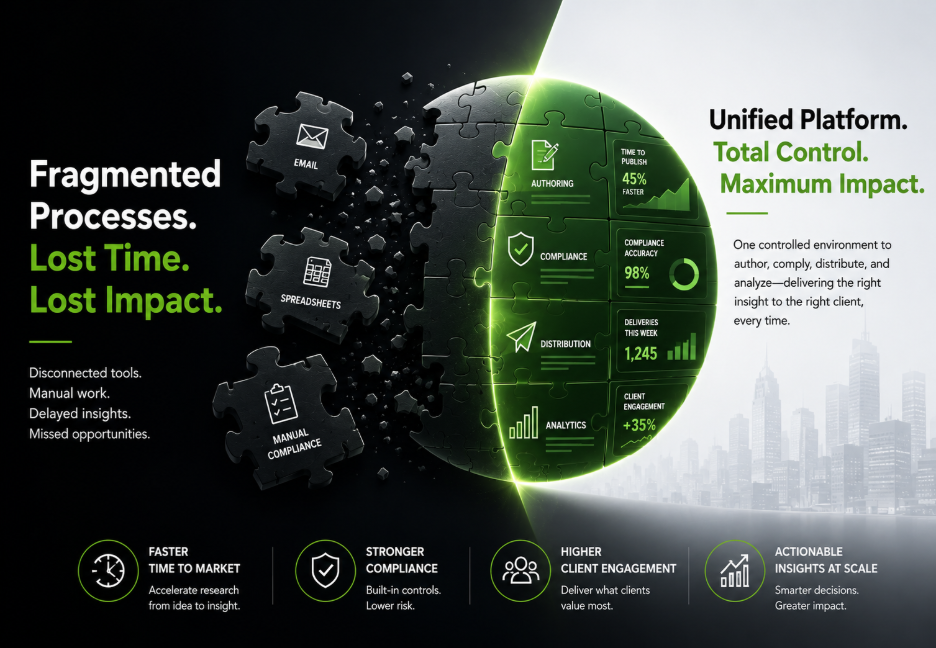
In institutional equities, research is judged on two things at once: speed and control. When research production processes are split across Word drafts, email chains, spreadsheets, manual approval steps, and disconnected distribution tools, the damage is not just internal. It shows up in missed publishing windows, slower client communication, weaker buy-side engagement, and less effective follow-up from sales and distribution teams.
That matters because in Equity Research, timing is part of the product. ANALEC Resonate is built around this operating reality: connecting authoring, workflow approval, compliance governance, distribution, access control, and readership intelligence in one controlled environment.
Why Do Fragmented Research Production Processes Slow Down Institutional Client Engagement?
Fragmentation rarely begins with one major failure. It usually starts with small breaks in the research workflow.
An analyst updates an earnings note in Word. Comments arrive by email. Compliance checks happen late. A rating change needs faster approval than the normal queue allows. The morning pack is still being compiled manually. Distribution preferences sit in another system. By the time the note is released, the market has already moved.
That is why workflow fragmentation is not just an operational inconvenience. It weakens a firm’s ability to publish timely views, govern sensitive content, understand client consumption, and convert research output into meaningful buy-side engagement.
For research leaders, the issue is broader than publishing speed. It affects research productivity, disclosure control, approval governance, audit trail quality, and research service effectiveness.
Where Does Fragmentation Show Up on a Research Desk?
ANALEC’s Resonate materials explicitly position the platform around authoring, workflow management, compliance controls, distribution, digital access rights management, and readership analytics because these breaks often sit inside the same research operating chain.
What Problems Do Equity Research Teams Face With Disconnected Workflows?
- Analysts lose time to formatting, version chasing, and manual publishing steps instead of producing differentiated investment research.
- Research collaboration weakens when drafts, comments, and approvals sit across inboxes and local files.
- Approval governance slows down when report types follow inconsistent review paths.
- Disclosure control becomes reactive instead of embedded in the process.
- Research distribution suffers when client preferences and entitlement rules are not tied to publishing.
- Sales follow-up becomes less effective when readership data is missing or arrives too late.
- Client service perception declines because delayed research feels less relevant, even if the underlying analysis is strong.
Why Are Efficient Research Workflows Commercially Important for Modern Research Firms?
A better investment research workflow does more than improve internal efficiency.
It helps firms get ideas to market faster, protect the integrity of sensitive content, and improve how research reaches buy-side clients. It also gives Heads of Research and distribution leaders better visibility into what clients actually consume, which themes travel well, and where follow-up should be focused.
That has direct commercial consequences. Faster publishing supports stronger buy-side engagement. Better governance reduces compliance risk. Better readership intelligence improves targeting. And when research reaches the right accounts in the right format at the right time, the firm gets more value from the same research effort.
How Does ANALEC Resonate Support a Unified Research Operating Model?
ANALEC Resonate does not simply automate report production. It brings together the core controls and workflows that research teams usually manage in pieces.
ANALEC’s materials describe a platform spanning MS Office-based authoring, document automation, workflow approval, audit trails, disclaimers and disclosures, content distribution to individual recipients and third-party aggregators, digital access rights management, and readership analytics.
That matters because the real value is not one feature. It is the operating model:
- one controlled environment for research creation and publishing
- clearer approval governance and auditability
- stronger version discipline
- faster, more reliable research distribution
- better visibility into client consumption and engagement
ANALEC case materials also show research firms looking to reduce manual work, strengthen workflow control, and improve digital delivery and engagement across the research function.
What Best Practices Should Research Leaders Prioritize?
- Standardize workflows by report type, urgency, and approval path.
- Reduce manual handoffs in drafting, review, and publishing.
- Embed disclosure control earlier in the research creation process.
- Connect distribution with entitlement management rather than treating it as a separate task.
- Track readership and engagement to improve targeting and sales coordination.
- Adopt integrated research technology that supports authoring, compliance, publishing, and analytics together.
What Is the Real Takeaway for Research Leaders?
Fragmented research production processes weaken more than internal efficiency. They reduce speed to market, complicate approval governance, limit client targeting, and make research output harder to convert into measurable engagement.
For firms that want tighter control over research creation, publishing, compliance, distribution, and client consumption, ANALEC Resonate offers a more unified path. It is worth exploring for research leaders who want a stronger operating model, not just a faster workflow.
FAQs:
1. What Causes Fragmentation in Equity Research Workflows?
Fragmentation usually comes from teams working across too many disconnected tools and handoffs. Analysts may draft in Word, circulate comments by email, manage approvals outside the publishing system, and handle distribution in a separate process. That creates delays, duplicate work, and weaker control over the final published output.
2. How Do Fragmented Research Workflows Affect Buy-Side Client Engagement?
When research publishing slows down, buy-side clients receive notes later, follow-up becomes less timely, and the perceived value of the research service drops. In institutional markets, relevance is time-sensitive, so even a strong research note loses impact when distribution, access, and client communication are delayed.
3. Why Do Approval and Compliance Steps Often Become Bottlenecks?
The problem is not compliance itself. The problem is when disclosure checks, signoffs, and audit controls are handled too late or outside the main workflow. That creates approval of bottlenecks, version confusion, and unnecessary risk around governance and publication timing.
4. What Should Research Leaders Look for in a Modern Research Operating Model?
They should look for a setup that connects authoring, workflow approval, compliance governance, distribution, access control, and readership visibility in one controlled environment. The goal is not just faster publishing. It is better control, stronger productivity, clearer auditability, and more measurable client consumption.
5. How Does ANALEC Resonate Help Research Teams Improve Client Engagement?
ANALEC Resonate is designed to bring together research authoring, workflow management, compliance controls, content distribution, digital access rights management, and readership analytics as part of a unified research operating model. That helps firms reduce manual friction, publish faster, govern content more effectively, and gain better visibility into how clients consume research.