
Why Collaborative Research Authoring Is Becoming Essential for Modern Research Teams
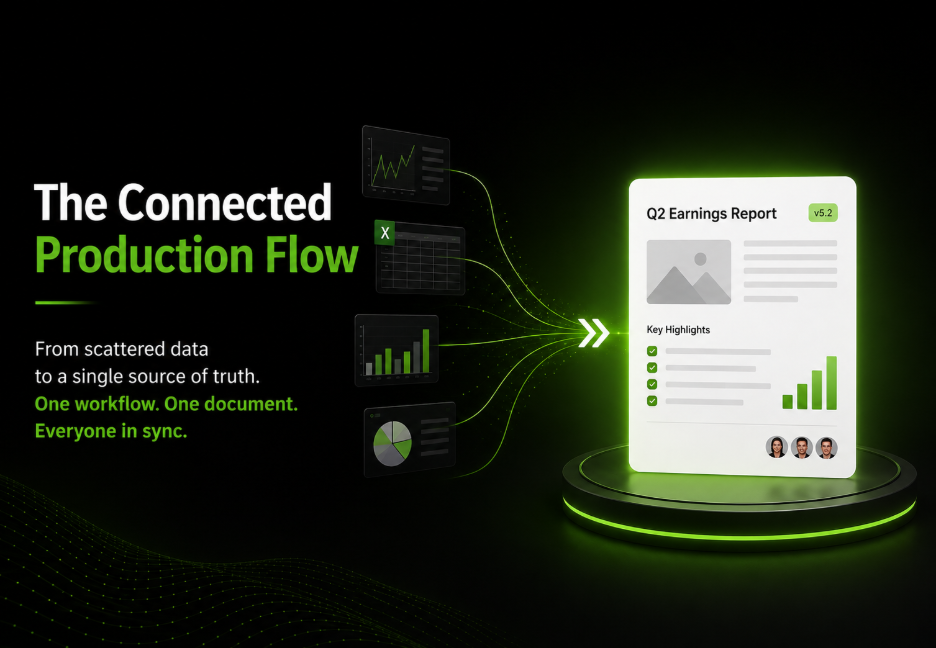
Research desks are being asked to defend coverage breadth while keeping the cost base under tighter control. MiFID II unbundling made research economics more visible, while broker-vote pressure continues to push firms to prove the value of what they publish.
That changes the production question. Speed still matters, but research leaders also need to understand what each additional note costs to create, review, approve and distribute. When that process depends on repeated manual work and disconnected systems, expanding coverage becomes increasingly expensive.
Why Are Research Desks Under Pressure to Produce More at a Lower Cost?
Institutional clients expect relevant research across companies, sectors and market events. Equity sales teams need timely content to support client conversations, particularly around earnings, market-moving developments and changing investment themes.
The difficulty is that broader coverage often brings more analyst support, formatting, supervisory review, compliance work and publishing activity. If those tasks scale almost one-for-one with output, the research cost base grows alongside coverage.
For research management, the question therefore becomes more specific: what is the cost of publishing the next note?
Resonate addresses this problem by connecting research authoring, workflow, compliance and distribution within one research production environment. The aim is to reduce the manual effort that accumulates as publishing volumes increase.
How Do Hand-Offs Increase the Cost of Publishing Research?
A research note may pass through analysts, associates, supervisory analysts, compliance teams and publishing staff before it reaches clients. Each hand-off consumes time. Some create significant rework.
Multiple contributors working across different document versions create reconciliation work. Changes to financial models add another layer of cost when numbers, valuation tables, charts and written commentary have to be updated separately.
Formatting creates further production work without improving the underlying investment analysis. Email-based reviews introduce additional version control, particularly when several reviewers are involved.
Why Is Late-Stage Rework Particularly Expensive?
The later a problem is found, the more of the production chain may need to be repeated.
A compliance issue identified immediately before publication, for example, may send the note back through authoring, formatting and approval. Senior reviewers then spend additional time checking revised content under greater deadline pressure.
When the same pattern occurs across every additional note, the marginal cost of research publishing rises quickly.
Why Is Fragmented Research Production Difficult to Measure?
Fragmentation creates a second problem: research management often cannot see what an individual note really costs to publish.
Authoring may happen in Microsoft Office. Reviews may happen through email. Compliance may sit in another process, while distribution operates in a separate system. The desk can see overall headcount and technology spend, but it has far less visibility into where production effort is being consumed.
This makes research P&L decisions harder.
A research COO may struggle to distinguish between a product that is expensive because it requires deep analytical work and one that is expensive because the surrounding production process is inefficient.
That affects decisions around:
- coverage expansion
- analyst capacity
- recurring research products
- publication frequency
- automation priorities
- product rationalisation
A connected production workflow provides a stronger operational basis for making those decisions.
How Does Coordinated Research Production Reduce Cost per Note?
The biggest opportunity comes from removing work that should not have to be recreated every time a note is published.
Consider a recurring morning pack or monthly digest. Much of the structure repeats from one edition to the next: standard tables, recurring charts, formatting, disclosure logic and selected content components.
Rebuilding those elements manually means paying the same production cost every cycle.
With template-driven automation and reusable components, the recurring structure is already controlled. Existing research content feeds new outputs where appropriate, while formatting and document logic remain consistent. Contributors work within a defined workflow, and compliance checks become part of production rather than a final-stage exercise.
This is where collaborative research authoring has economic value. It reduces the incremental effort required to turn analysis into publishable research.
How Does Resonate Connect Research Authoring, Review and Compliance?
Resonate treats research production as one connected process rather than a set of separate publishing tasks.
How Does Resonate Reduce Authoring Work?
Resonate generates a five-page research note in 15 seconds by automating financial and standard non-financial inputs within the research template.
Valuations run off the centralised market data feed, helping maintain consistency in the financial information feeding repeated research production.
Authoring operates within Microsoft Office, allowing analysts to work in a familiar environment while the surrounding production process remains structured.
How Does Resonate Manage Approvals?
Each note template carries its own approval nodes. Workflow actions are date- and time-stamped, while turnaround time is tracked through the approval process.
This gives research managers clearer visibility into where a note sits in the production chain and where delays are developing.
How Does Resonate Strengthen Research Compliance?
Compliance sits inside the same production workflow.
Document Sweep and OCR strengthen compliance checks, while multi-jurisdiction compliance supports firms publishing research across different regulatory environments.
Once the note reaches final approval, research moves directly into PDF or HTML delivery. Fewer disconnected stages mean fewer places where work has to be repeated.
How Does Research Content Create Value After Publication?
The economic value of research does not stop when the original note is published.
Resonate componentizes research so commentary, charts, tables and other content created during authoring feed additional outputs and downstream systems.
For example, analysis already created for a company note may also support a morning publication, client email or another digital research format. The underlying work is reused rather than rebuilt for every channel.
How Does Resonate Manage Research Distribution?
Resonate distributes research to individual recipients and third-party aggregators.
RIXML-based contribution supports delivery of research and associated metadata to external research platforms, while consumption tracking provides visibility into how that content is used.
Client preferences, delivery modes and access rights are managed as part of the distribution workflow. That creates continuity between publication and client delivery.
How Does Resonate Protect Published Research?
Digital access rights management adds controls after research leaves the publishing environment.
Resonate supports hidden PDF watermarks, download limits, one-time-password access and IP-based access controls. Research firms can also restrict editing or the lifting of content from PDFs.
These controls are particularly important where intellectual property moves across clients, portals and external distribution channels.
How Do Readership Analytics Improve Research Decisions?
Readership analytics provide another layer of information once research reaches the market.
Research teams track consumption by individual recipient and institution, including how content is accessed and which publications attract engagement.
This creates a clearer link between production effort and client response. Research management gains a better basis for deciding which products deserve greater capacity, which recurring outputs should be automated and where the research database is producing measurable client value.
The chain is therefore broader than authoring alone: content is created, reused, distributed, protected and measured.
Why Will Cost per Unit of Coverage Matter More for Research Desks?
Research P&L pressure will make cost-to-publish increasingly important.
Management teams will need a clearer understanding of what it costs to maintain company coverage, respond to earnings, produce recurring research and add another sector or product to the research offering.
The firms with the strongest operating model will be those that reduce repetitive authoring, late-stage rework and disconnected distribution while preserving analyst judgement and research quality.
Analec Resonate operates at that level in the production economics of the research business, not simply at the document layer.
FAQs
1. What Is Collaborative Research Authoring?
Collaborative research authoring is a structured approach to creating, reviewing and publishing investment research across multiple contributors. It brings analysts, associates, supervisory reviewers and compliance teams into a coordinated workflow so research notes move through production with greater consistency and less manual rework.
2. How Does Collaborative Research Authoring Reduce the Cost of Publishing Research?
It reduces the amount of repetitive work attached to each new note. Reusable content components, template-driven authoring, defined approval workflows and embedded compliance checks help research teams avoid rebuilding the same formatting, disclosures, charts and content structures for every publication.
3. Why Is Research Workflow Fragmentation a Problem for Research Desks?
When authoring, review, compliance and distribution sit in separate systems, research managers have limited visibility into where time and cost are being consumed. That makes it harder to assess cost per note, allocate analyst capacity, evaluate recurring products and make informed decisions about coverage expansion.
4. How Does ANALEC Resonate Support Research Authoring and Compliance?
ANALEC Resonate connects authoring, workflow approval, compliance and distribution within one research production environment. It supports Microsoft Office-based authoring, template-specific approval workflows, date- and time-stamped workflow actions, Document Sweep and OCR compliance checks, multi-jurisdiction compliance, and PDF or HTML delivery.
5. How Can Research Teams Create More Value From Published Research?
The value of a research note can extend beyond its initial publication. Resonate componentizes research content so commentary, charts and tables can feed additional outputs and downstream systems. It also supports controlled distribution, digital access rights management and readership analytics, giving research teams greater visibility into how clients consume and engage with their content.